Monday, February 22, 2010

Power Designers: Coco Chanel

by Isabella E. Isbiroglu

1883-1971, portrait by Douglas Kirkland late 1960's

The article, “L’Allure de Chanel: The Couturiere as Literary Character”, written by Lourdes Font reflects on the relationship that Gabrielle Chanel shared with writer Paul Morand. Morand wrote the book L’Allure de Chanel, published in 1974, recounting the story of Chanel’s life. There are plenty of Chanel memoirs written, but his version is so appealing because he tells Chanel’s story including fact and fiction. Font states, “Morand’s Chanel is the Chanel we think we know. For this reason alone, it is worthwhile to learn more about him and their relationship.” The article centers itself around the bond that Chanel and Morand shared and how this affected both of their professional careers.

Morand contributed to what is now the myth of Chanel and the many stories surrounding her.


Font explains how Morand and Chanel met, but pointing out that the exact date is unclear for several reasons. The first reason being that “nothing that concerns Chanel is simple or clear”, referring to Chanel’s tendency to lie about her history. Font continues stating that Morand had an active social life, “taking every one in with a hungry novelist’s eye, and recording his impressions in a journal.” The first time Chanel was mentioned was in 1917 in his journal. In Chanel’s recount of her first meeting with Marand, she was at Cecile Sorel’s dinner party, where George Boy Capel escorted her, but Capel is not mentioned in Morand’s journal. Morand moved in the same social circles as Capel, so therefore it is possible that they did not actually meet until 1919-1919.

Font continues to explain the detailed relationship between Morand and Chanel. Font points out that in Morand’s book L’Allure de Chanel he gives the impression that he and Chanel did not meet until a party on New Years Eve in 1921. Font gives us two possible theories as to why he did not acknowledge their relationship until later. Morand entered Chanel’s life when she was deeply saddened by the loss of Boy Capel and when she was experiencing success as a designer. There are two ideas that Font explores. The first is that Morand had a reputation of being a womanizer, therefore wanting to omit the “tête-à-têtes” in 1918. The second idea is that Chanel and Morand would meet in the evenings and talk about Boy Capel.

Morand tells the tell of the well connected, revealing Chanel's power began with the proper endorsement. Above left Chanel with Capel who introduced her to the private life of wealth at right with the British Prime Minister. Her androgynous dress fit in with a world of men.

The author conveys this brief history in order to segway into the topic of Mallard’s book, Irene et Lewis. Font only includes so much detail about Chanel’s relationship with Boy Capel and how this was relevant to Monard because in his novel, the two characters seem to have much in common with the couple. Font analyzes both characters comparing Irene to Chanel and Lewis to Boy and while they do draw similarities, they also draw differences. It is evident that Morand did draw inspirations from his characters from Chanel’s personal life with Capel, but it is not an autobiographical piece on their relationship.

The real piece that depicts Chanel’s life is in fact L’Allure de Chanel. Font reveals the difficulties Morand faced when trying to write her memoirs the first time. She would constantly lie about her early life, ending the collaboration in failure. It was only after her death that he was able to pull his notes together and tell her story exactly the way she did. It is mentioned that both Morand and Chanel had a certain “stylistic rapport” that complimented the other. L’Allure de Chanel would be one of the more famous depictions of her life because of the special relationship the author shared with the subject.

Font concludes her article by emphasizing that it is important to understand that Boy Capel shaped Chanel to whom she was, but it was Morand that gave her the voice for the rest of the world to know who she was. Font ends the article stating, “Finally, we should also recognize that the Chanel we think we know—who is Paul Morand’s Chanel—is a work of art because she is a literary character.”

The Chanel suit of the 1902's a looser form of the 1960's version

I find Font’s article to be well informative, unique and interesting. Her main focus is the relationship between Morand and Chanel, highlighting that Morand’s memoir transformed Chanel into a work of art by making her into a fictional character. While Font stresses the importance of Morand’s other work Irene et Lewis she also places somewhat of an equal importance on Boy Capel. I believe she does so, so that the reader has an understanding that not only was Capel her lover, but her foundation. The article stresses Morand’s strong relationship with Chanel giving him the capabilities to write about her. What we can infer from this reading is that Chanel and Morand had a unique relationship. Chanel inspired Morand and Morand gave Chanel a voice through his literature.


What I find to be the most interesting about this article is that Font is able to connect fashion and fiction. She does not just state the Morand wrote about Chanel and did a good job, she explains why this particular relationship is unique. Boy Capel played a huge role in Chanel’s life, both personally and professionally. Morand was part of their social circle, having a better understanding of Chanel’s life. In addition, in the final paragraph, Font addresses Chanel’s love for novels. Chanel stated that she learned about life through novels. This highlights her personal relationship with Morand more exclusively because he was a writer. He wrote her own story and by drawing form Chanel’s experiences and putting them into Irene et Lewis, Chanel may learned about her own life through this piece of fiction. Font recognizes this idea when saying, ”But Chanel could not have seen herself in the character of Irene. In Lewis, however, she had to have recognized a devastating portrayal of Boy Capel.”

Information on the author: Lourdes Font: This article was taking from the book Fashion Theory published in 2004. Lourdes is a costume and textile historian who teachers in the History of Art department at the school of graduate studies at FIT. She is particularly interested in art and literature. She has earned her MA in Costume Studies and a PH.D. in Arts and Humanities from NYU. She taught history of dress at NYU and at Parsons. Since 2003 she has been a full time faculty member at FIT. She has overseen exhibits curated by her students at the museum at FIT. In addition, she has presented papers at the Frick Collection’s Conference on Dress and Art.

Chanel by Douglas Kirkland


Designer and business woman she was not only strategic about the release of her own memoirs but also promotional photos below from 1959.

US Vogue below, 1961


Chanel handpicked her models, not for beauty as much as poise and social connection, below couture models waiting, 1964

The Chanel brand and use of black and white were created by Coco and are still used in original form. Below Ali McGraw, 1966.


The last collection SS 197. Chanel died on January 10 and the collection was presented on January 26 with an audience of 1000.


Karl Lagerfeld has been directing Chanel since 1983. He still designs the classic suit and shoots the campaigns himself.

2009 campaign


Lagerfeld below at SS 2010 Couture


F 2009 RTW

Lagerfeld is known for introducing the original branded accessories.


Tuesday, February 16, 2010

The Fashion World

by Danielle Auerbach

Fashion has many power players. Above clockwise from left Anna Wintour, Carine Roitfeld, Francios Pinault, Bernard Arnault, Marc Jacobs, Karl Lagerfeld and Steven Gan. Below a chart of the entertourage of assistants to fashion photographer Nick Knight.

The fashion world not only consists of many powerful figures but many others such as a celebrities and socialites take part in the scene, building interest around fashion.


Adorned in Dreams, Elizabeth Wilson: In the introduction of Adorned in Dreams Elizabeth Wilson discusses the urbanity of fashion but also examines the origin of new trends and how they have influenced the evolution of the industry as a whole, as well as fashion’s effects on society. Interestingly, Wilson argues that “new fashion starts from rejection of the old and often an eager embracing of what was previously considered ugly” thereby subtly undercutting its own previous assertions and never providing a definitive conclusion. (393) Fashion, according to Wilson, is like a cultural phenomena of a symbolic and mythic kind, which makes it impossible to define.

Viktor & Rolf, F 2008

Interestingly, Wilson also considers fashion through the psychoanalytical perspective but unlike Gilbert she examines it in terms of its historic relationship with the western world and how individuals react with one another as a result of dress. For example, especially throughout the last few centuries people have dressed themselves in accordance with their place in society. Wilson provides the example of a woman dressed “Chic” and how it might as well be the uniform “of the rich, chilling, anti-human and rigid.” The stereotypes associated with dress have the ability to create tension amongst individuals and groups dressed differently. However, in recent years this has become less of an issue as a result of modern mass production, as a greater amount of individuals now have access to more fashionably styled clothing. In fact, Wilson argues that as a result of mass production which has made it more difficult to differentiate between class statuses, consumers are stepping out of their shells and using style as a way of expressing individuality which has created a movement of counter-cultural solidarity.

Steven Meisel, 2009

Wilson also addresses the concern which fashion has presented to feminists for years, as dressing well has been “commonly assumed to have been restrictive for women and to have confined them to the status of the ornamental or the sexual chattel.” (395) Wilson counters this perception and explains that conversely, fashion has provided women with an outlet for self expression and the opportunity to express themselves as individuals.

Furthermore, she describes fashion as a manifestation of the “civilizing process” although in recent times capitalism has become “global, imperialist and racist.” Interestingly, she describes how “Western fashions have overrun large parts of the so-called third world. In some societies that used to have traditional, static styles of dress, the men, at least those in the public eye, wear western men’s suits—although their national dress might be better adapted to climate and conditions.” (396)


In conclusion, Wilson establishes that “Fashion speaks capitalism.” As capitalism has the ability to maim, kill and lay waste it also has the power to create wealth and beauty thus making us both hate and love capitalism; therefore it only makes sense that we love and hate fashion for all of the ambiguities and contradictions it possesses.

Capitalism is not specific to the American way but a generalized force of consumption that is expanding its territory. Below an Italian ad for Roberto Cavali.


“Urban Outfitting: The city and the spaces of fashion culture” by David Gilbert: The article “Urban Outfitting: The city and the spaces of fashion culture” was written by David Gilbert, and was included as the first chapter of the book Fashion Cultures: Theories, explorations and analysis. In this essay Gilbert divides his thoughts into three separate sections in order to establish fashion culture in relation to modern cities. First, Gilbert explores the aspects of fashion culture which encourage production in central urban locations; second, he determines the long term process which establishes certain cities as key sites of fashion; and finally, he describes cities themselves as objects of fashion, subject to the inevitable cycles of fashion.


Comme des Garcons, 54 Rue du Faubourg Saint-Honoré, Paris

Cities are influenced by several factors which determine them as fashion hotspots. The geography of fashion culture is influenced by certain cities being amongst the strongest and longest established of global brands. Gilbert argues that “Paris” as a word on a label is hard to specify from the city itself. Evaluated through the lens of “symbolic ordering,” the city name of Paris, New York, Milan, etc., is often used for the value of its association as a fashionable city, without there being any real connection between the item and the city itself. Thus we buy the product because of the global reputation of the label, and in doing so we are allotting more power to that city as a fashion epicenter.


Chanel & Hermes Paris

Gilbert addresses a common anticipation, in which fashion will be deurbanized as a result of the internet which has brought promotion, advertisement, and purchasing ability into the home. However, he qualifies this statement as he explains the excitement of fashion stemming from the physical experience that is impossible to receive from the disembodied and unplaced act of purchasing over the internet, as a result of the symbolic significance of consumption. In other words, an item assumes a particular significance which one associates with the process he/she experienced to purchase it. As a further explanation, Gilbert provides the example of “A shirt or skirt bought as a part of an expedition to the big city [which] can have a quite different personal meaning from an identical item bought locally or over the Internet.” (11). Consumers are constantly purchasing items directly from the store at a higher price tag, and they do it willingly as they know they are paying for the carrier. Although the notion of paying more for an item purchased at a desirable location may seem extreme, it is done constantly and epitomizes the capitalist and consumer natured Western civilization, which should eliminate anticipation of de-urbanized capitalism.


Burberry in Knightsbridge, Stella in Mayfair

In the second part of his essay, Gilbert determines the long process entailed in the establishment of cities as key fashion sites. He writes: “The continuing status of London, New York, Milan, and particularly Paris has to be understood through the long term intersection of a number of cultural and economic processes bound up with the development of the modern city.”(15) He then proceeds to identify five main themes useful to consider when establishing the geography of fashion’s world cites, which include the following: the urban consumer revolution of the eighteenth century, the economic and symbolic systems of European imperialism, the development of rivalries between European fashion cities, the influence of an American engagement with European fashion, and finally, the development of a symbolic ordering of cities within the fashion media.

In the late seventeenth and early eighteenth centuries, European and North American cities were learning new practices of consumption. However, what distinguished Paris, London, Milan and New York into breeding grounds for central fashion locations, were their positions in the network of world trade which enhanced the supply of new unique experiences, and thus provided opportunity for the acceleration of the fashion cycle. An extreme example of this can be seen through the figure of London’s “Macaroni” which was established in the 1770s. The “Macaroni” was a fashionable man who was notorious for his indulgent geographic reach of clothing, and his fastidious eating, gambling, and lifestyle habits. Furthermore, as Gilbert quotes writer Miles Ogborn, the “Macaroni” was “understood within the international chains of the commodities that made London itself a dangerous place through the ways in which its endless varieties of consumption brought together the produce of the world.” (15). Access to these commodities were of vital importance as urban locations began to establish themselves as fashion epicenters. However, throughout the consumer revolution many fashion centre’s geography remained pre-industrial, as an economic structure was established which was characterized by small scale workshops instead of by factory production. Thus fashion was not only significant for the elite, but it was also extremely prominent in the “back regions” of the city where it was made, finished and copied.

New York Uptown Barneys & Ralph Lauren

The origin of modern fashion culture in cities like London and Paris is largely a result of their imperial past and post-imperial present. Imperialism created the economic ordering of the fashion industry by establishing international divisions of labor. Imperialism also provided for exotic stylistic incorporations into the designs produced making the fashion of these imperial cities far more unique and aesthetically appealing.

The age of Empire was classified as one with highly unequal relations between Europe and the rest of the world as well as economic, political and cultural competition between the countries within the European borders. The competitive ambience sensed throughout the continent resulted in magnificent architecture of the capital cities, the enormous size of great exhibitions, and of course the influence of high fashion soon became yet another way the European countries competed with one another, always striving further in attempt to outshine their neighbor.


New York Downtown

Americans have always been vastly enamored with Parisian fashion; so much so, that international tourism became one of the growth industries of the Second Empre Paris, “and by the end of the nineteenth century developments in transatlantic travel helped to turn the city into the hub of the European tour for thousands of upper and middle class Americans.” (18)Furthermore, the American adoration for Parisian fashion and culture yielded to the romantic portrayal of the city through Hollywood, throughout the twentieth century. This portrayal yielded to an obsession of Paris amongst American’s who had never visited before and this obsession continues to exist today.

The last theme which Gilbert suggests his readers to consider in terms of the development of fashion’s world cities, is the symbolic ordering of cities within the fashion media. This theme was brushed upon earlier in the article and is the subject of the article’s final section. Gilbert identifies fashion as part of its own “symbolic order.” The “symbolic order” was established by theorist Jaques Lacan in his psychoanalytical theory in which things exist in the “real” and the “imaginary.” When items are purchased because they have an affiliation with either Paris, New York, London, etc., Gilbert refers to this as the ‘hallucinatory’ projection of images of desire. The name of a city on a label is a part of the “imaginary” realm, as the consumer makes assumptions of the product based upon the reputation of the city.

At last, in “Urban Outfitting: The city and the spaces of fashion culture,” David Gilbert successfully establishes the important and long lasting, dependant relationship which exists between fashion and its central cities.

Above: Photograph from Streetpeeper.com. This popular website documents street style captured in fashion savvy cities. It is one of many examples of how influenced we are by urban dress, especially in fashion epicenters.

"How the Runway took off”- Amanda Fortini: According to Fortini’s historical account of the American runway, the first fashion show took place in a New York City specialty store in 1903. The store, Ehrich Brothers, put on this show in an attempt to lure middle class female customers in. Seven years later, many big department stores were holding shows as well, which proved to be an extremely effective method of promoting merchandise and improving the status of the store in the eye of the clientele.

By the 1920s, the fashion show had gone mainstream as retailers throughout the country staged shows of their own. However, the early fashion show was different from what it is today as it was significantly more theatrical, often presented with narrative comedy and frequently organized around themes.

Eleanor Lambert above

The current bi-annual ready to wear fashion week circuit: NY/London/Milan/Paris

In 1943, New York City celebrated its first Fashion Week, which was essentially an attempt to overthrow the sartorial tyranny of the French. Before the Second World War, American designers were heavily reliant on French couture for inspiration. However, when the Germans occupied France in 1940 American buyers, editors and designers were unable to travel to Paris for inspiration. Thus in an attempt to promote definitively American fashion, Eleanor Lambert, a well known fashion publicist, organized “Press Week” which was essentially New York City’s first fashion week. As Lambert had hoped, American designers successfully made innovative strides forward which captured the attention of the elite magazines like Vogue and Harper’s Bazaar, which had previously been consumed with French fashion.


The extravagance of the French shows designed by the team Villa Eugenie


See the chronological history of the runway here


Monday, February 15, 2010

Mallarmé & The Fashion Magazine

by Alex Goldman

This week’s selection by Furbank and Cain focuses on Stephane Mallarme: a poet who started a decorative and informative publication titled La Derniere mode in 1874, Paris. La Derniere mode is considered one of the earliest fashion magazines in history. It debuted during the beginning of the Third Republic. German reparations had been paid off, the Franco-Prussian war was over, but France was still politically and economically unstable.

La Dernière Mode was a limited edition fashion magazine/art project created by 19th century poet Stéphane Mallarmé.


While Furbank discusses La Derniere mode as a publication, Cain talks about La Derniere mode as a reflection of the dawn of the Third Republic, and how it fit into the society of the day. Cain characterizes this new Third Republic as having “laws of governance but no constitution, until its demise in 1940, but its whole existence was always ghostly. Similarly, in 1874 France had no capital; the government sat in Versailles, but Paris, punished for its Communard activities, had no special place. Like the Thermidor revolution, this was the revenge of the provinces on Paris” (212). La Derniere mode appealed not to the provinces, but to the Parisian upper-class, and continued to reaffirm Paris as the art and culture capital of France.


In mid-19th century France, there was tension between the middle class and the upper class, which translated directly to tension between the peasants in the provinces and the urban Parisians. Cain explains that while the Parisians were the landowners that had the monetary wealth, the people in the provinces were considered these unruly masses, and although they had land, they despised and feared the dominance of Paris. The rise of department stores preceded La Derniere mode in the 1860s, and transformed the act of shopping into as much of an outing for the wealthy as going to, as Cain exemplifies, the Louvre. Bear in mind, that during this time the middle classes were still buying raw textiles and making their clothes with sewing machines (a new invention at the time) at the home, and had no use for department stores or magazines that talked about the newest and latest styles.


Mallarmé, b. 1842- d.1898


Furbank emphasizes that as a poet, people thought that Mallarme was crazy. He edited, designed and wrote everything in La Derniere mode “under a variety of pseudonyms,” named Madame de Ponty, Miss Satin, and Ix. (5). Mallarme’s “Madame de Ponty” persona, for example, discusses fashion as materialism: “A fashionable woman does not suffer financial pressures, because Fashion has, precisely, full power to defeat them….The ‘bon ton’ of Fashion, which forbids it to propose anything aesthetically or morally disgraceful…” (10). ‘Her’ ideology about fashion appealed only to a Bourgeoise audience, and makes strong assumptions about the relationship between fashion and economic status. It is interesting that the Furbank writes of Mallarme’s pseudonym characters as though they have their own mutually exclusive opinions and personalities. Madame de Pont and Miss Satin, “represent two different traditions in magazines themselves, both of which Mallarme inherits. As well as the fashion magazine properly speaking there was another kind of publication, aiming at helping the bourgeoisie overcome the pitfalls which might await them in their social ascent” (214).


Furbank and Cain note that there were other philosophers and theorists writing about fashion during Mallarme’s time, such as Baudilaire and Gautier. Baudilaire saw fashion as a logical evolution. He believed that women used fashion to separate themselves from nature, and in his opinion, fashion and nature exist in two completely separate, non-intersecting spheres. Mallarme on the other hand believed that there was no separation between nature and art, or nature and fashion as an extension of art. “Again, one of the favourite tropes or principles of Madame de Ponty, as of Ix, is that the monde (world) in the ‘high-life’ sense (i.e. the scene of worldliness and fashion) is synonymous with the monde or world in the everyday sense (i.e. meaning everything that there is); and this is closely related to a further trope, that ‘Nature’ is a false concept, ‘Nature’ and the man-made are not to be distinguished” (9).


Stéphane Mallarmé, Le Hasard, 1881

Furbank writes however that Mallarme possessed qualities distinguishing him form these other fashion theorists. Mallarme made himself both a fashion designer and a “parody of …several different kinds of fashion journalists, and this opened up to him possibilities not available to a mere critic or theorist, like Gautier or Baudelaire” (10). La Derniere mode served as Mallarme’s outlet for philosophizing and theorizing about fashion, and sharing his vision about fashion that extends beyond the clothing. For example, Furbank and Cain describe the layout of each issue of La Derniere Mode on pg. 13, explaining that each included sections dealing with “fashion and its nature and principles,” food, interior decoration, a poem, a short story, a lifestyle section dealing with books, theatres, and travel, a “column of correspondence with subscribers,” and an advertising section (13). Mallarme showed that all of these categories correlate to a fashion of the time, and he would influence and direct the Bourgeoisie’s opinions on which foods, destinations, books, shows, etc. were fashionable by writing them as so in La Derniere mode.

Printemps publication, 1874 and and La Dernière Mode, 1874

Critics of Mallarme include Jean-Pierre Lecercle and Roger Dragonetti, who wrote about La Derniere mode over 100 years after it debuted. Author Roger Dragonetti (1992) Claims that La Derniere mode didn’t even exist at all except as a “…piece of private publication for the eyes of a group of friends, who were bound by a vow of secrecy about it. It was not merely, under one aspect, a fantasy about and take-off of a real fashion-journal (which indeed it was; it was wholly a fantasy or ‘phantom’)” (11). There is evidence that the publication was indeed real, but Dragonetti, in his critique, is convinced that Mallarme was creating too much of a parody to have actually been interested in Fashion (12). This suggests that Dragonetti believes that those who were or are truly interested in Fashion take it with the utmost seriousness.

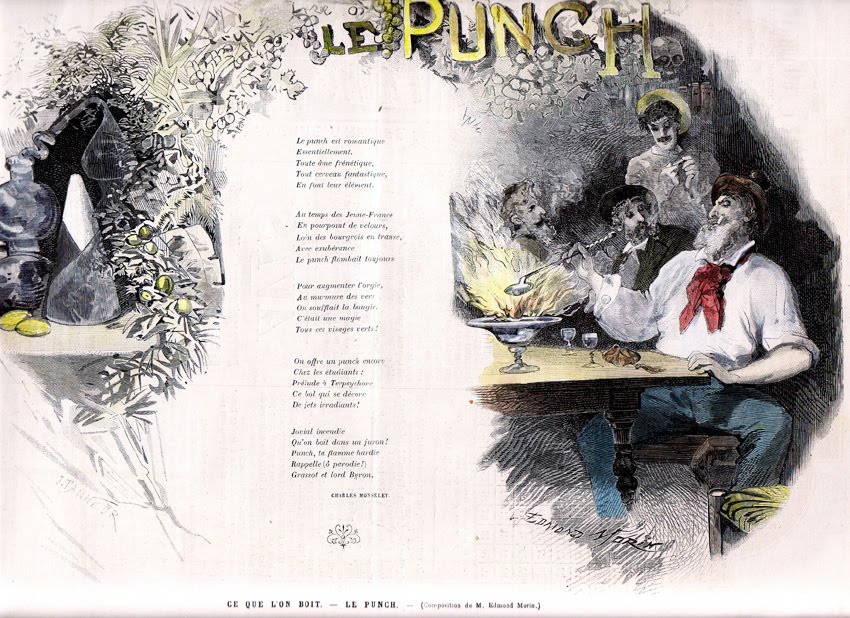
The illustrator Edmond Morin, Le Monde Illustré (Mars 1885) - Original en Couleur


Excerpt from La Dernière Mode, 1874

During Mallarme’s time, life in Paris essentially was a fashion show, a display, to see and be seen. Especially at the theater, which Mallarme “rightly devoted a large part of La Derniere mode to” (215). In the mid-1870s, there was a genre of theatre called “Pieces a femme,” which was like an early fashion show, where both the “spectators become spectated; everything is spectacle” (216). La Derniere mode had fantasy-like qualities that made it appear to be out of touch with reality, while it actually served as a brilliantly devised social commentary, mixing all that was in fashion with the politics of the era.


Anonymous, Inauguration du Palais Garnier en 1875

One of Cain’s final points is that in La Derniere Mode, Mallarme translates France’s political and economic instability and uncertainty at the end of the Second Empire “into the field of fashion” (219). In fact, the Fashion industry in Paris from the mid-late 1800s, up until post World War II, was a significant contributor to the upswing of the French economy. (214). Disasters of the Franco-Prussian war put a freeze on dressmaking in Paris. This shows how politics affected fashion. During this time, women began to wear men’s clothes out of necessity due to the lack of women’s clothing available, and people were convinced that this was the demise of France. Cain makes a final suggestion that in a country as eager to achieve secularism as France, it is no wonder that fashion had become women’s object of ‘worship.’ (221).

To summarize, Furbank and Cain discuss how revolutionary a publication La Derniere mode was. Mallarme designed, edited, and wrote it under pseudonyms that each had individual, smart opinions about life and fashion in the haute society of 1870s France. He did not reveal that these “writers” were all him, and no one at the time had a clue. All the while that this Bourgeoisie publication was geared toward steering the fashion and life decisions of the upper class, it reflected the revival of France after the Franaco-Prussian war and the idea that Fahsion would be a key player in rebuilding France’s economy.


See more on La Derniere Mode here
See the chronological history of the fashion magazine here